AgentCommerce
I originally was going to start this by saying “I don’t know much about anything to do with crypto”. That’s how I felt, but when I reflect I must admit:
- Sometimes I long for the fractions upon fractions of Bitcoin I mined on my GTX960 years ago now. While I know they have never been worth much, it would be nice if I recalled where they were.
- I spent part of a summer trying and failing to make a crypto trading bot using Genetic Algorithms and scraped Twitter data.
- I had a fleeting academic interest in the topic of trust in somewhat inherently nefarious settings
But so much has happened in the space since then and I felt left behind in the shallow end.
I had especially been interested in Hedera as I remember watching a lecture on their Gossip about Gossip consensus mechanism.
So when I saw ‘Agentic Society: Panels by Day, Hackathon by Night’ pop up on Luma I jumped on it.
The opening panel was comprised of a who’s who of interesting titles and unfamiliar brands. I was enthralled from start to finish.
What I took away is that the infrastructure of our society isn’t ready for the implications of an “agentic economy” but serious people are working on it, ESMA among them. The overlap with my day job made it land even harder.
AgentCommerce
This is what Claude, Daniyal and I came up with. Be a Shopify Storefront owner who has been raring to jump on the AI wave they can’t stop hearing about. Install one Shopify app. Start receiving orders placed by agents.
For agents and their owners, essentially a forum to determine the trust of a vendor and a marketplace to find stuff.
All built on top of Hedera.
Hedera?
Assuming you haven’t seen the lecture cited above yet, Hedera is a distributed ledger built on top of a directed acyclic graph that uses a ‘Gossip about Gossip’ protocol where nodes pass information about the history of the transactions they’re aware of. The hashgraph distributed consensus algorithm atop this functions to process thousands of transactions per second.
HCS
Hedera Consensus Service acts like a decentralized notary, providing verifiable and immutable timestamps for events without storing the data itself. My understanding is that this is directly a feature of the mechanisms described above. A service where I can trust who said what, when.
For our use case that’s exactly what we want to know. A vendor announces they have a catalogue of products, agents will let the network know when they have purchased something from a vendor. This allows a vendor to build a reputation based on a history of transactions. I suppose the agents and the vendors are trusting us (AgentCommerce) that this history is representative of real transactions of goods and services rather than otherwise arbitrary transactions.
The HFS Fiasco
HFS is a file system built on top of the same consensus primitives. HBAR Transactions (almost forgot about the currency part…), HCS messages and HFS files all have different payload sizes; HCS and HFS support chunking a payload across several messages or file-append-transactions. So to read a single payload one may have to construct the entire thing from these fragments.
We opted to just use HCS to post the vendor catalogues and not worry about using the proper tool, HFS, for the sake of a “simpler mental model”… A lot of the headache experienced during implementation was because of this, and forgetting about the extent of its implications in our solution while in a sleep deprived frenzy to get the demo ready.
In reflection, the idea of having an MCP Server, an API, a facilitator, a Shopify plugin, even using Hedera in general for the first time led to us thinking that trying to use one service was better for the hackathon context than using two. At risk of overcomplicating the solution.
x402
An open neutral standard for internet-native payments built into the much beloved HTTP. A client requests a web resource, receives a 402 response with pricing and payment details, retries the request with a signed payment and the web service validates the payment and returns a response to the API request.
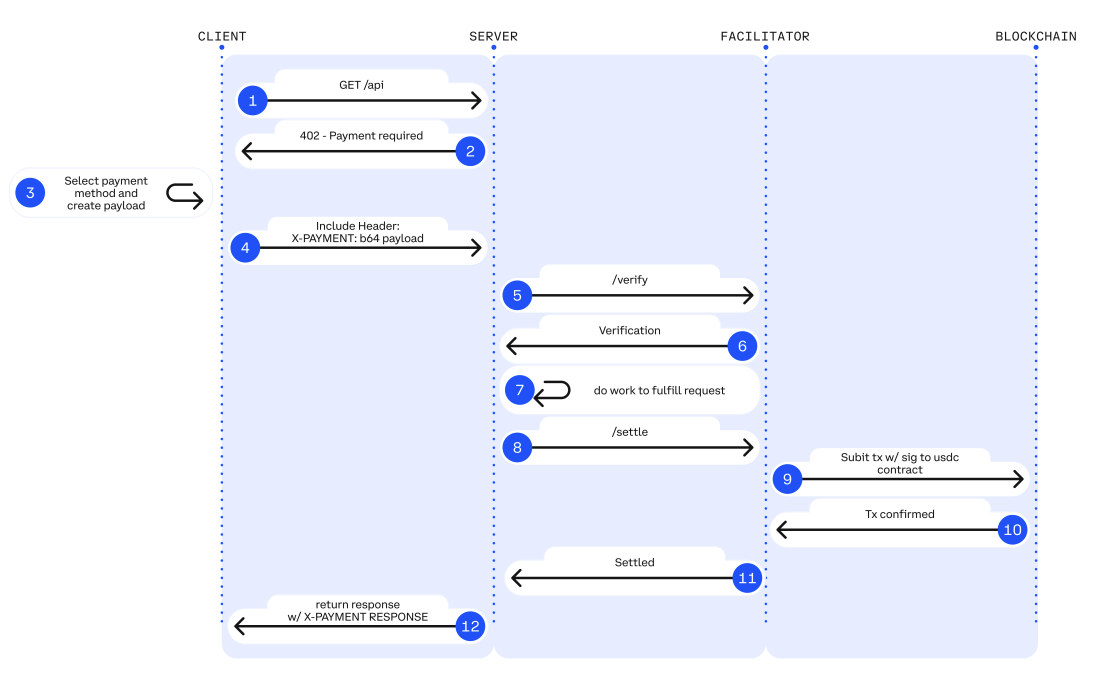
Taken from the x402 Whitepaper
Such bog standard HTTP, what is there not to love? A lot apparently, hence MPP. A topic that warrants further consideration. Especially since another winner of the same hackathon natively brings MPP to Hedera! At time of writing I cannot recall what their team name was and I must’ve failed to appropriately play the LinkedIn game. More sleuthing required, let me know if you know…
Interestingly AgentCommerce is the server and facilitator. The resource the client wants is a x402 endpoint to hit for a product or service. We also host that endpoint, facilitate the transaction where the client sends currency to a wallet we created for the vendor, and when the payment is settled we make the API call to the vendor that they have a new order.
Shopify
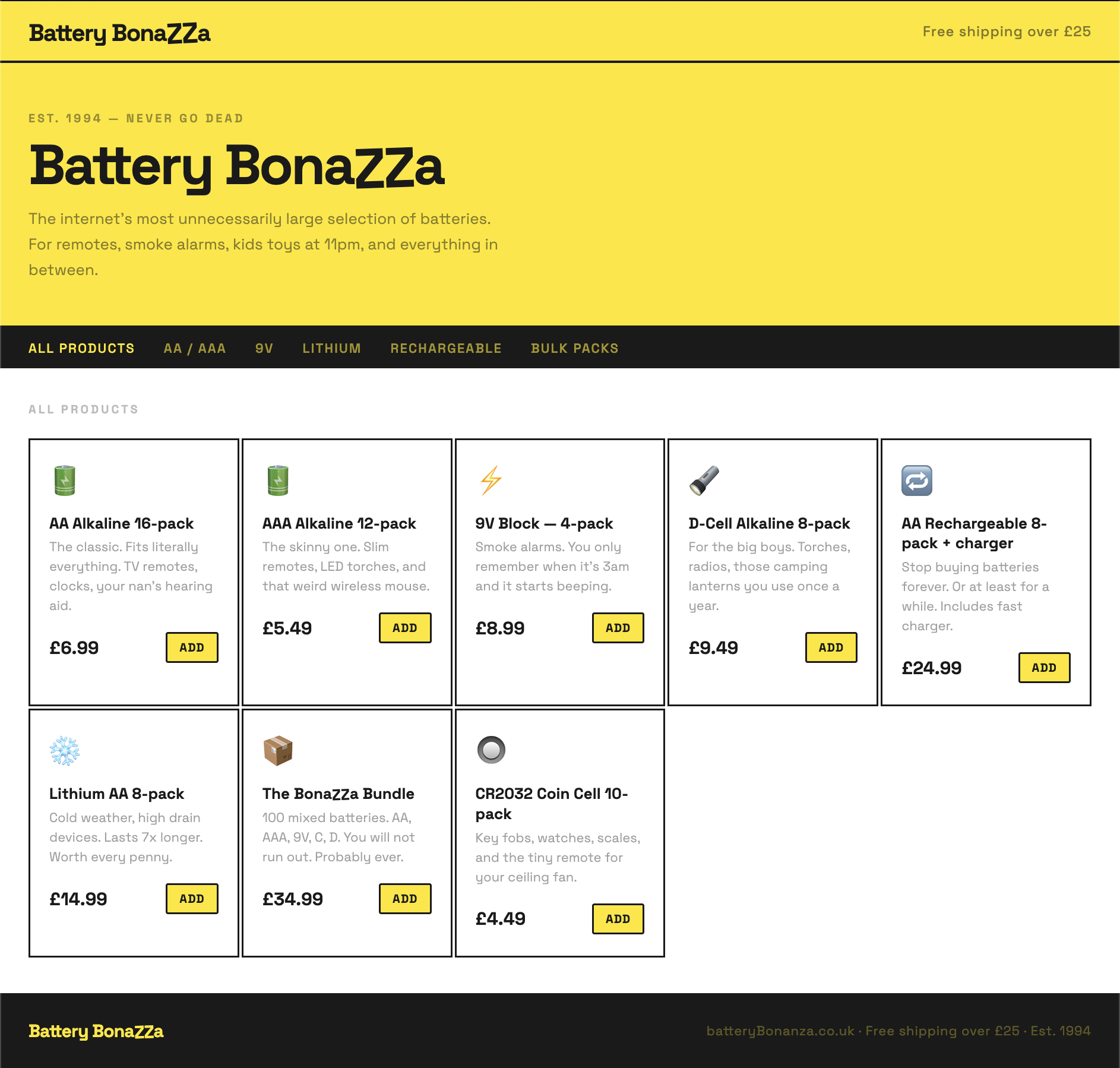
This was the storefront for our demonstration vendor, Daniyal did a great job embodying a forward thinking battery salesperson.
There are millions of storefronts on Shopify and they trade hundreds of billions worth of dollars for mostly-human customers and vendors. How wonderful would it be if every Shopify storefront could easily make itself available for agents while allowing vendors to build a reputation among agents through a history of verified purchases.
Shopify supports an App feature that with one click will allow AgentCommerce to scrape the vendor’s catalogue and post it to our HCS registry for discovery. It also gives the vendor a wallet and holds auth credentials that will allow us to submit an order via Shopify after the payment settles.
Although that last part feels against the spirit of a truly decentralised solution.
Architecture
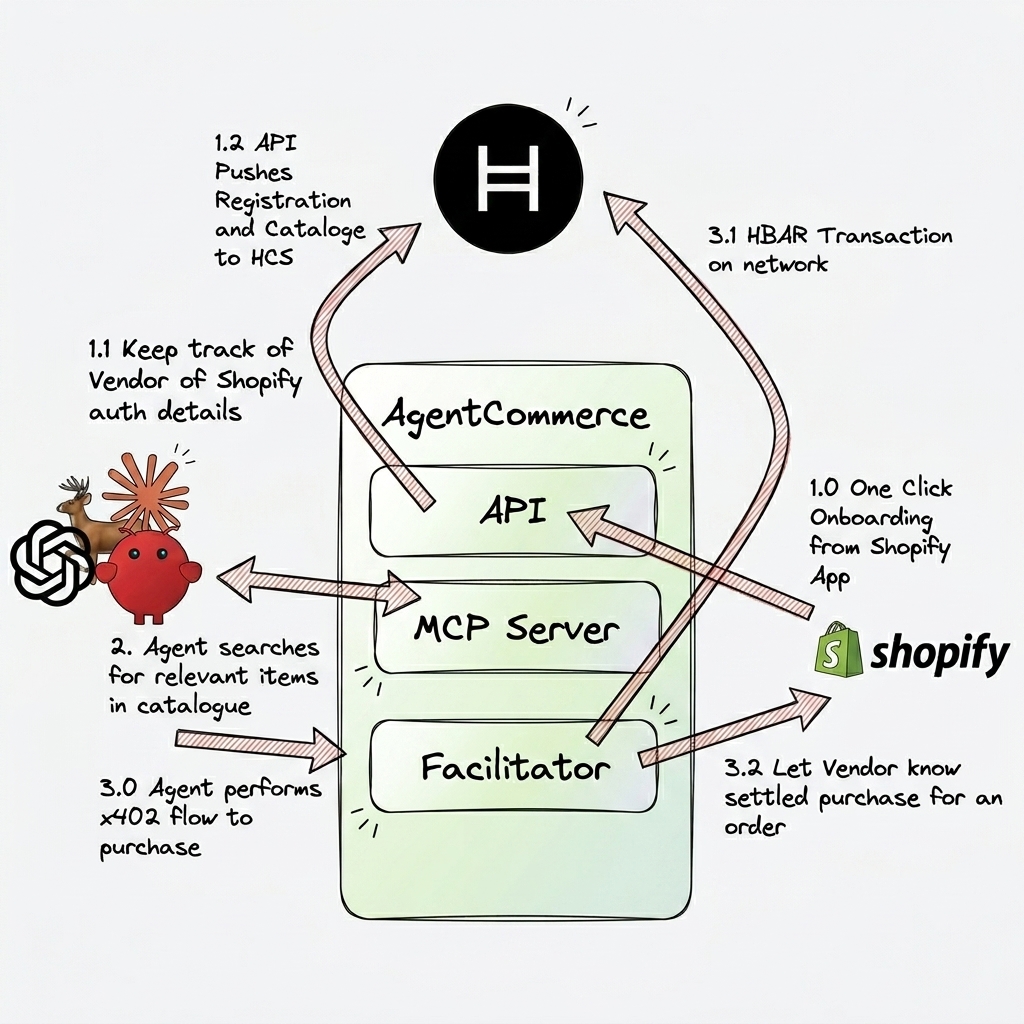
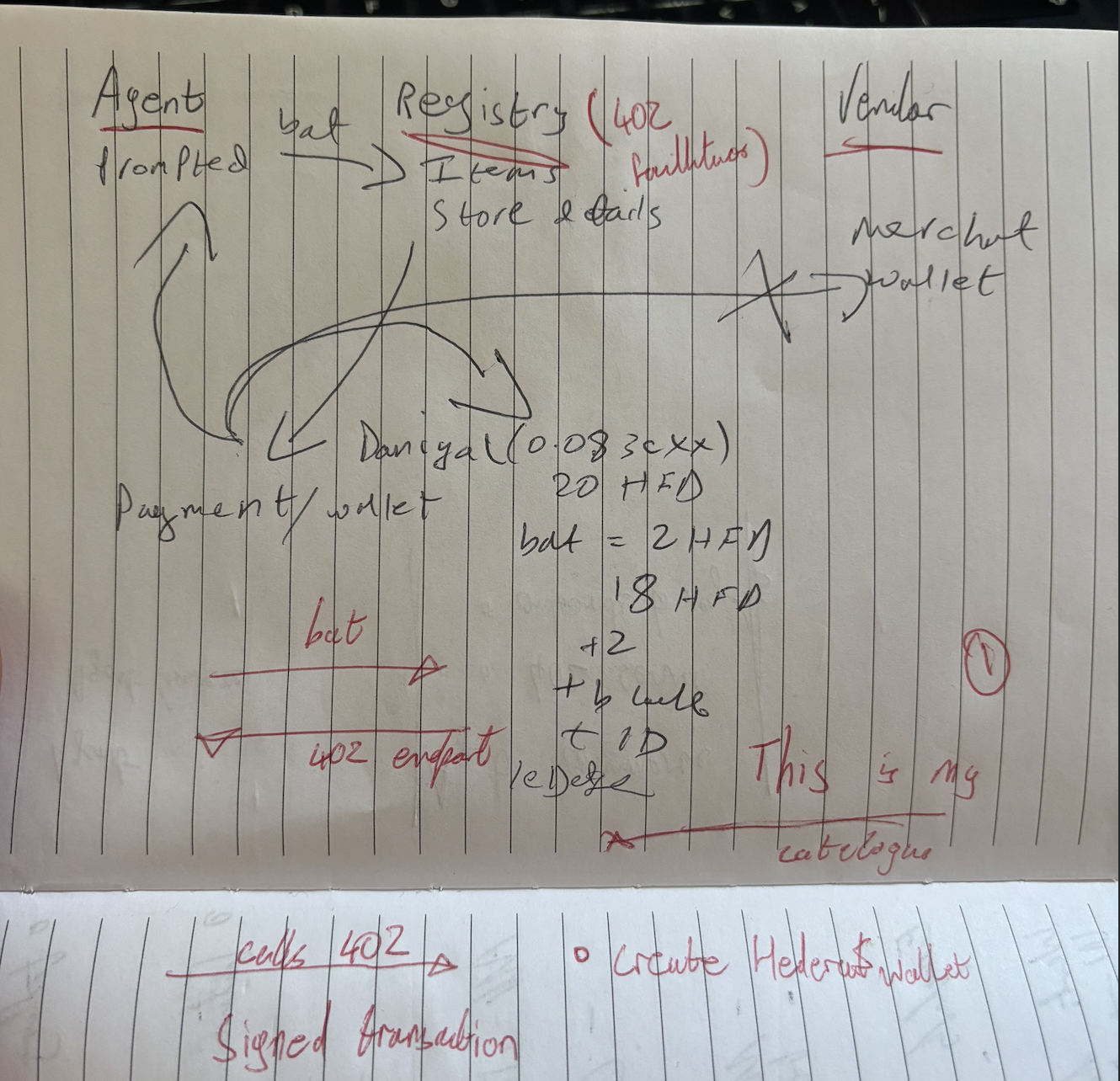
Hover for the prequel.
It’s worth noting that we only inform the vendor after the payment settles, a slight departure from what is shown in the x402 figure above.
Conclusion
Hedera will see me again.